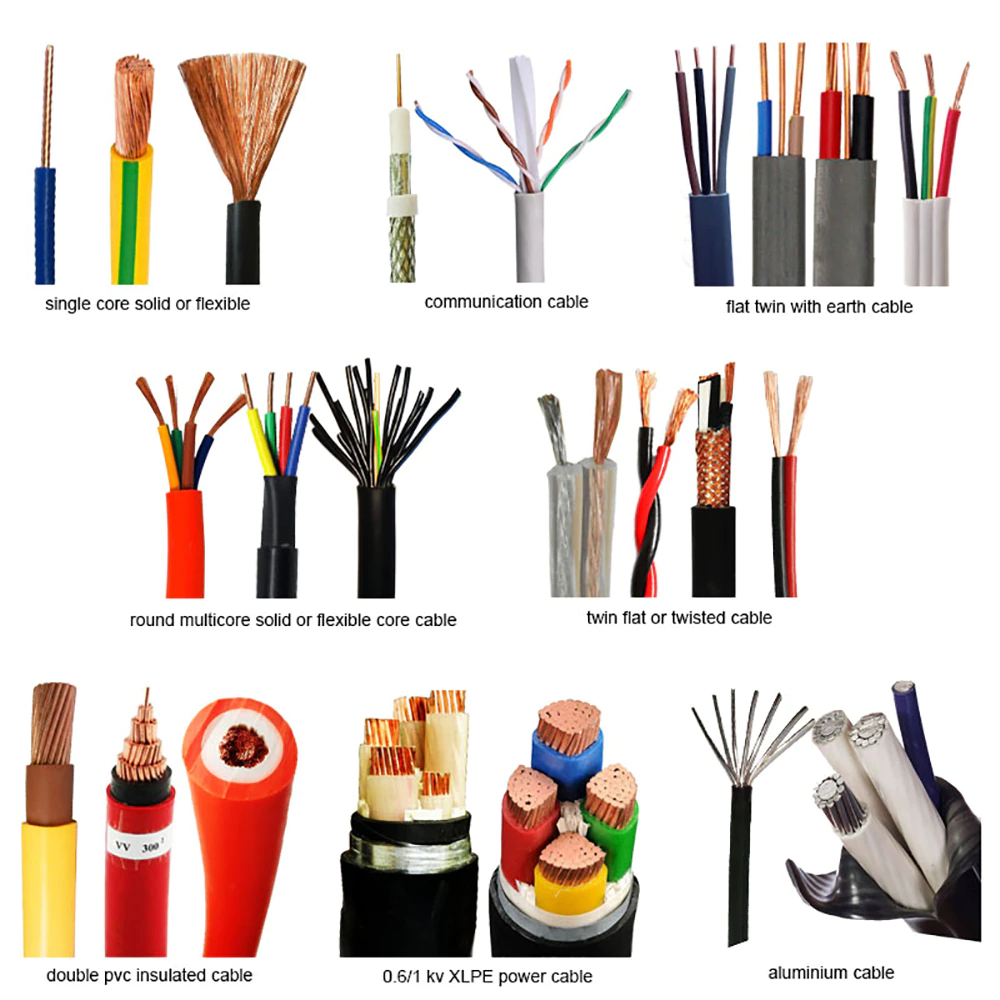
The basic key difference between wires and cables is that a wire is a single conductor whereas a cable is a group of conductors. Although, these conductors are made of a common material- copper or aluminium. Usually, the wires are bare and are twisted. But, some of the wires are coated with thin PVC layer. Types of cable are Twisted pair cable, coaxial cable, multi conductor cable, armoured cable, shielded cable and fiber optic cable. We are the reputed company for providing PVC Insulated Cable to our clients. It is highly acknowledged among our clients for its excellent quality and high heat resistance property. Furthermore, the quality of PVC Insulated Cable is tested by our quality experts on different parameters. We offer this product at most affordable price range to our clients.
A wire is used to carry electricity, to bear the mechanical loads, to transmit telecommunication signals, for heating jewellery, clothing, automotive or any industrial manufactured parts like pins, bulbs and needles. A cable is used for power transmission, for telecommunication signals or to carry electricity. NM Cable. The most common type of home electrical wiring is the NM cable, also known as the Romex cable, after the most popular electrical wiring brand name. …
Armored Cable. … Underground Feeder Cable. … Low-Voltage Wire. … THHN/THWN Wire. … Phone and Data Wire.
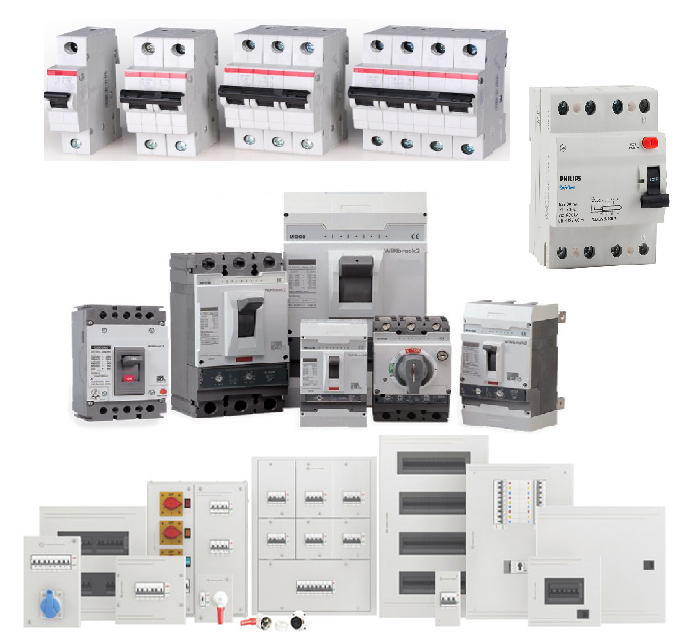
MCB – These are an alternative to fuses and are used to protect circuits from excess current. These miniature circuit breakers (MCBs) are automatic switches which open when the current flowing through them exceeds the value for which they have been set. Several different MCB types are available – types A, B, C, D, K, and Z. However, the three key versions are type B, type C, and type D. Each is designed to be responsive to the likely strength of electrical surges in different settings. SP ( Single Pole ) MCB: In Single Pole MCCB, switching & protection are affected in only one phase.
DP ( Double Pole ) MCB: In Two Pole MCCB, switching & protection are affected in phases and the neutral.
TP ( Triple Pole) MCB: Only three phases of the circuit are switched and protected by a triple/three-phase micro circuit breaker, not the neutral.
TPN (3P+N) MCB: A TPN MCB has switching and protection for all three phases of the circuit, and Neutral is also included as a separate pole.
4 Pole MCB: A four-pole MCB is similar to a TPN, but it also has a neutral-pole protective release. Types of Circuit Breakers. MCB, MCCB, RCD, RCCB, RCBO, ELCB, RCCB, ACB, VCB, MOCB, BOCB, SF6 CB, GFCI, MPCB, HVDC, DC-CB, Auto CB.
Distribution board – A distribution board (also known as panelboard, breaker panel, electric panel, DB board or DB box) is a component of an electricity supply system that divides an electrical power feed into subsidiary circuits while providing a protective fuse or circuit breaker for each circuit in a common enclosure. It is important to understand the different purposes of the distribution board. Bearing industrial uses in mind, different boards are suggested based on electricity and power usage and usage of cost-efficiency products. Here are some of the types of distribution boards used in industries: Motor Control Centers (MCCs), User-Friendly Human Machine, Interface (HMI), Operator Panels, Industrial Hydraulic Control Panels, Programmable Logic Controller (PLC) Panels and Industrial Hydraulic Control Panels
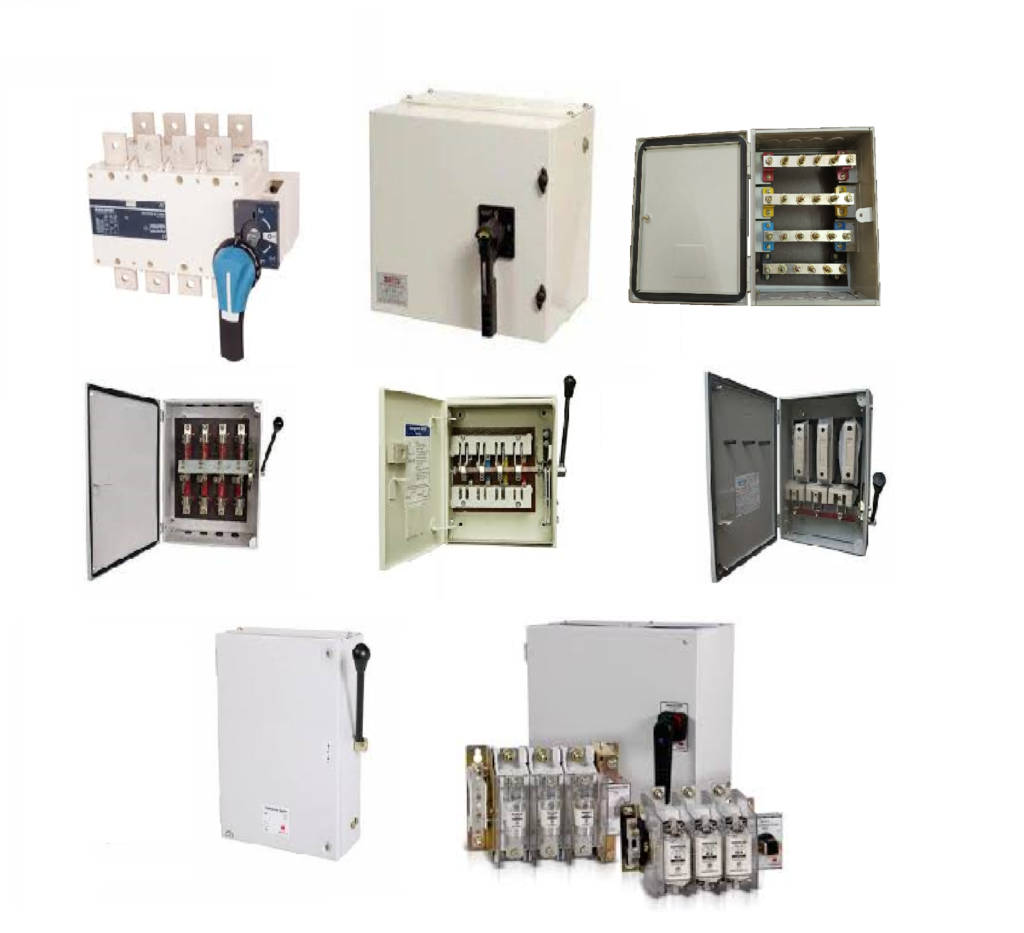
Changeover – A changeover switch is used during an outage. It is designed to transfer electricity from the commercial power grid to a local generator. Therefore, when the end user is experiencing a power cut, the generator from the changeover switch will provide power.
SFU – Switch fuse is a combined unit and is known as an iron clad switch, being made of iron. It may be double pole for controlling single phase two-wire circuits or triple pole for controlling three-phase, 3-wire circuits or triple pole with neutral link for controlling 3-phase, 4-wire circuits.
Busbar – Busbars are produced in a variety of shapes, including flat strips, solid bars and rods, and are typically composed of copper, brass or aluminium as solid or hollow tubes. Some of these shapes allow heat to dissipate more efficiently due to their high surface area to cross-sectional area ratio.
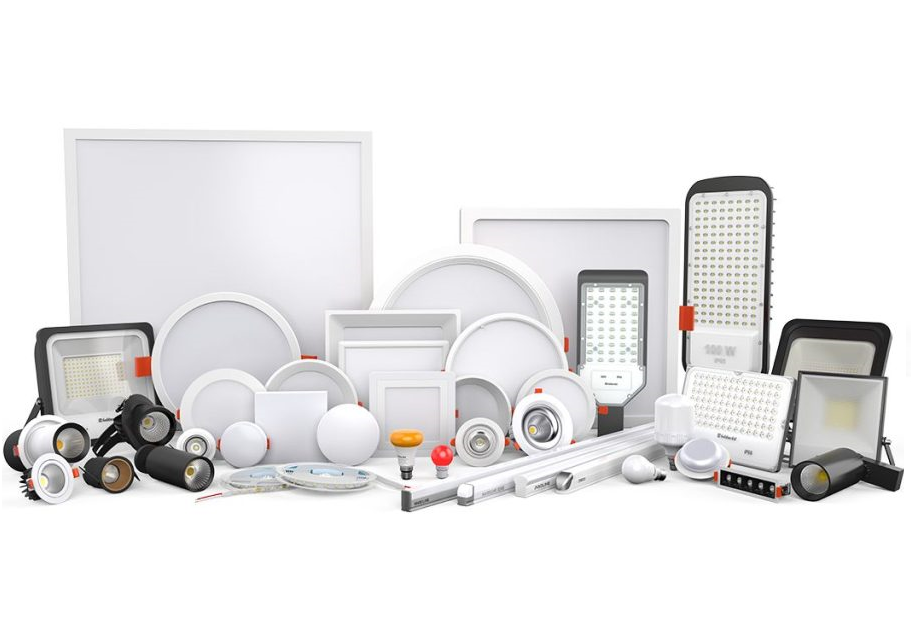
Lighting or illumination is the deliberate use of light to achieve practical or aesthetic effects. Lighting includes the use of both artificial light sources like lamps and light fixtures, as well as natural illumination by capturing daylight. Fundamentally, there are three different types of LED technology that are used in LED lighting – DIP, SMD and COB.
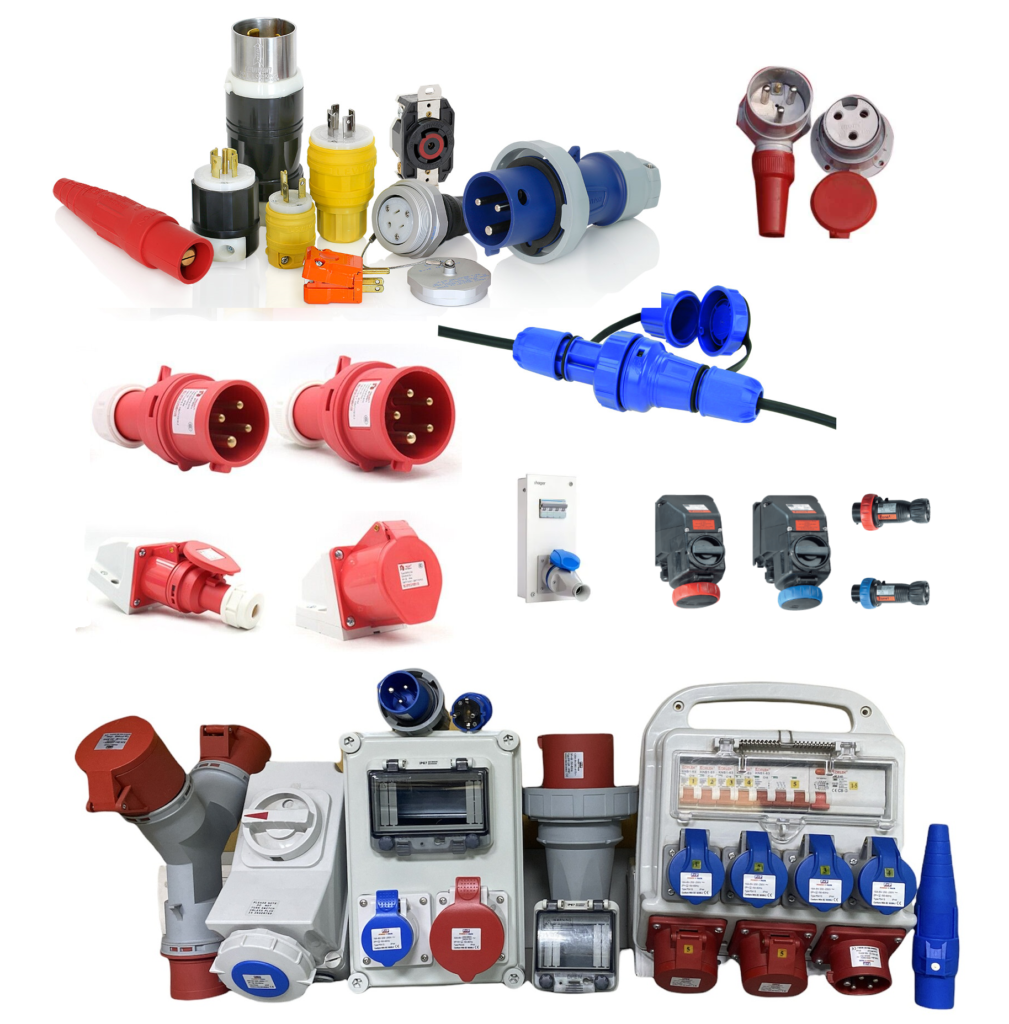
Industrial plugs and sockets are two main products used in electric power distribution systems. They provide an electric connection to the mains, which have a higher voltage than the household plugs. This is how it provides a consistent power supply to large machines and devices.Types Of Industrial Plugs and Sockets
3 Pin 16A, 32A & 63A, 240V AC IP44 & 67 versions.
5 Pin 16A, 32A, 63A & 125A, 415V AC IP44 & 67 versions.
3, 5 Pin 16A & 32A, 240/415V AC interlocked sockets IP44 & 67 versions.
AC distribution box with socket 16A, 32A & 63A IP40 versions.
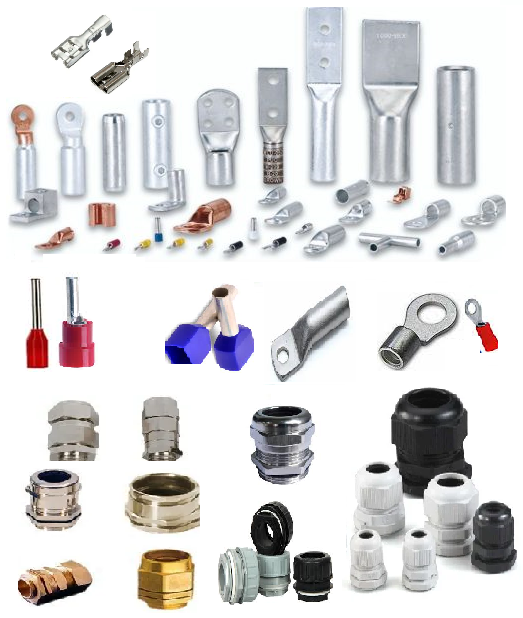
lUGS – Most common use of lugs includes connecting one cable with another cable or connection more than two cables. It is also used in connecting fuse sockets, load switches and electrical appliances, other than for connecting cables and power lines. Types of Cable Lugs, Ring Type Lugs, Pin Type Lugs, Fork or U Type Lugs, Male & Female Connector Lugs and Flat Type Lugs.
GLANDS – Cable glands may be used on all types of electrical power, control, instrumentation, data and telecommunications cables. They are used as a sealing and termination device to ensure that the characteristics of the enclosure which the cable enters can be maintained adequately. There are four Cable Glands classified as single compression, double compression, flexible hose and PVC.
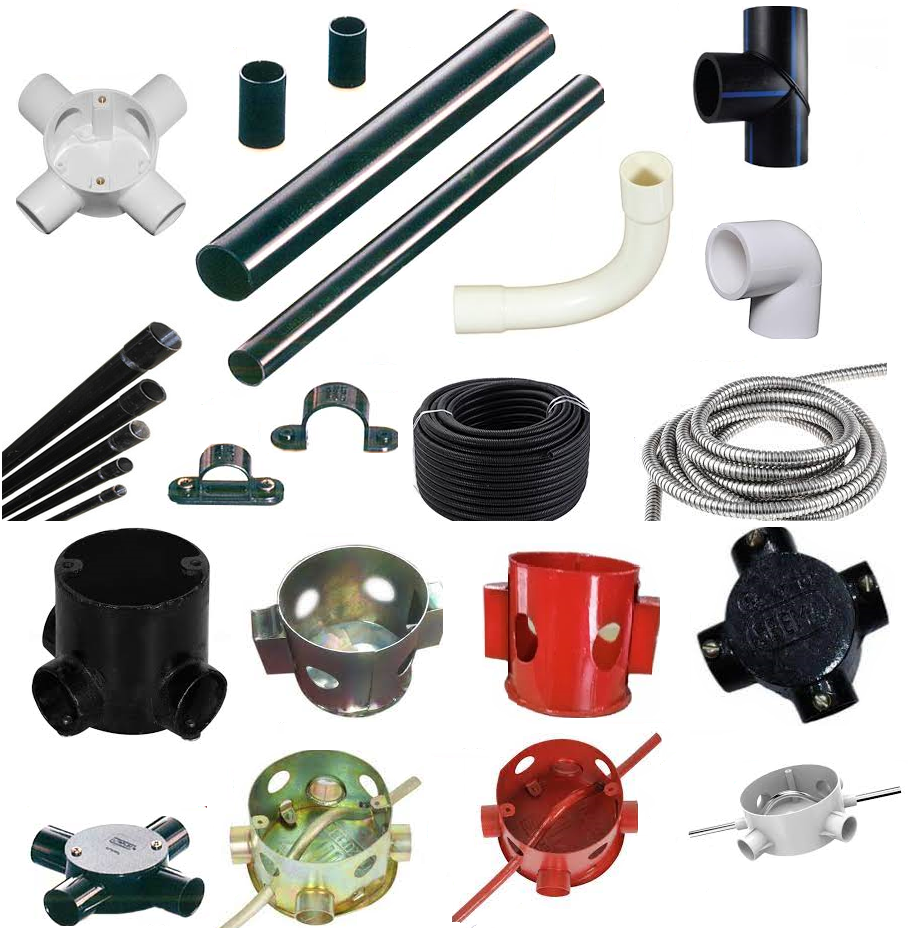
Conduit and fittings form systems to route and protect wire and cable. Conduit encases conductors to prevent environmental and impact damage and prevents people from touching wire. Metallic conduit is crush-resistant and intended for heavy-duty applications. PVC conduit is lightweight and suitable for outdoor use. Other types of conduit fittings include adapters, bulkhead fittings, caps, couplings, elbows, expansion joints, flanges, nipples, plugs, reducers and setscrew.
“The items used in domestic and industrial electrical wiring are called electrical accessories, e.g., switch, holder, socket, plug-top, ceiling rose, fuse cut-out etc. A switch is used to make a circuit ON and OFF.
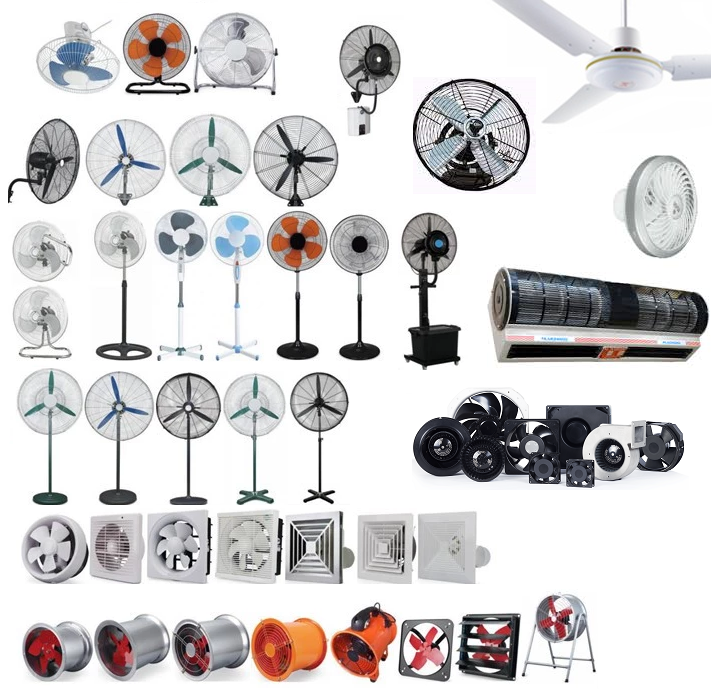
Fans used to cool electrical equipment or in engines or other machines do cool the equipment directly by forcing hot air into the cooler environment outside of the machine. There are three main types of fans used for moving air, axial, centrifugal (also called radial) and cross flow (also called tangential).
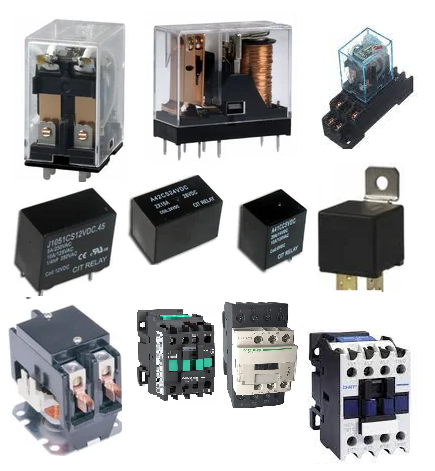
A contactor is an electrically operated switch which is designed to make or break the electrical power circuits. There are many different contactors: auxiliary contactors, power contactors, and spring-loaded contactors; two are continuous power contactors: stationary and movable contactors. A relay is an electromagnetic switch that is designed to operate electrically and used for switching the circuits by using low power signals. Types of relay : Electromagnetic relay. Electromagnetic relay is the simplest, oldest and most widely used relay. …Latching relay. …Thermal relay. …Reed relay. …High voltage relay. …Time Relay. …Current and voltage relay. …Differential relay.
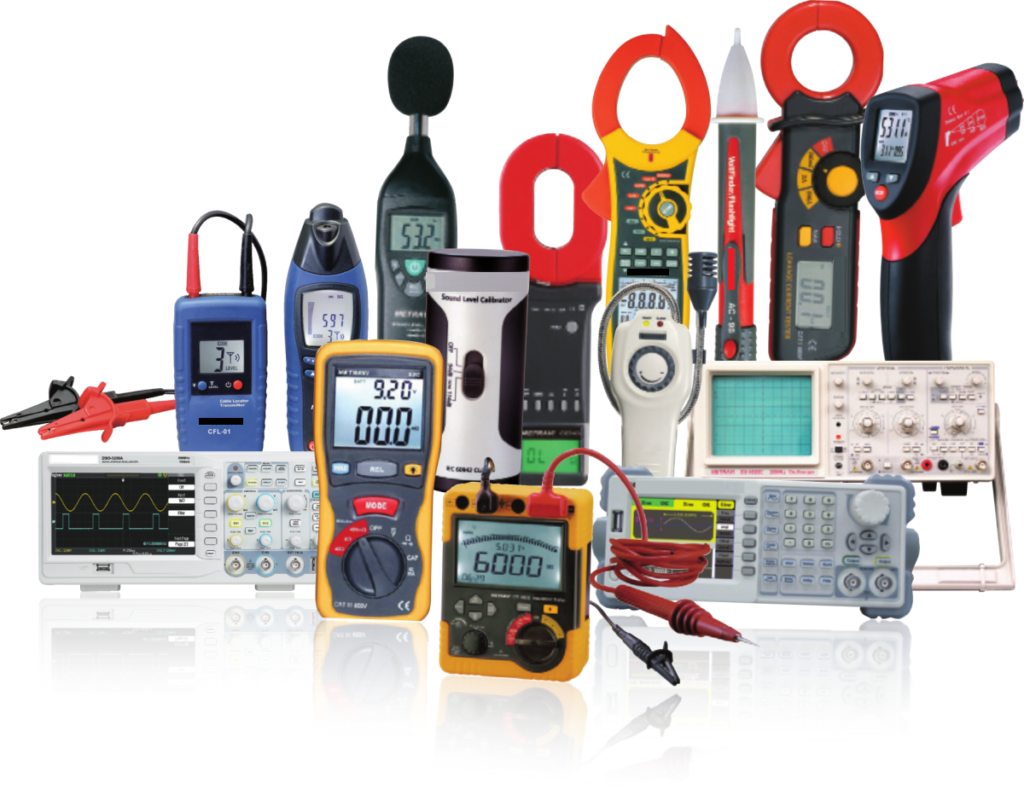
Electrical measuring equipments are all the devices used to measure the magnitude of an electric current with different objectives. The values that are usually measured with this equipment are current, voltage, resistance, and power. Each is expressed in different units: amps, volts, ohms, and watts, respectively. Here is the list of the most popular and widely used instruments : Ammeter, Voltmeter, Ohmmeter, Multimeter, Wattmeter, Fluxmeter, LCR meter and Oscilloscope.
An electrical control panel is an enclosure, typically a metal box or plastic moulding which contains important electrical components that control and monitor a number of mechanical processes. KEY accessories – 1) Cabinet. The cabinet is the most obvious element of a control panel that people generally see. …
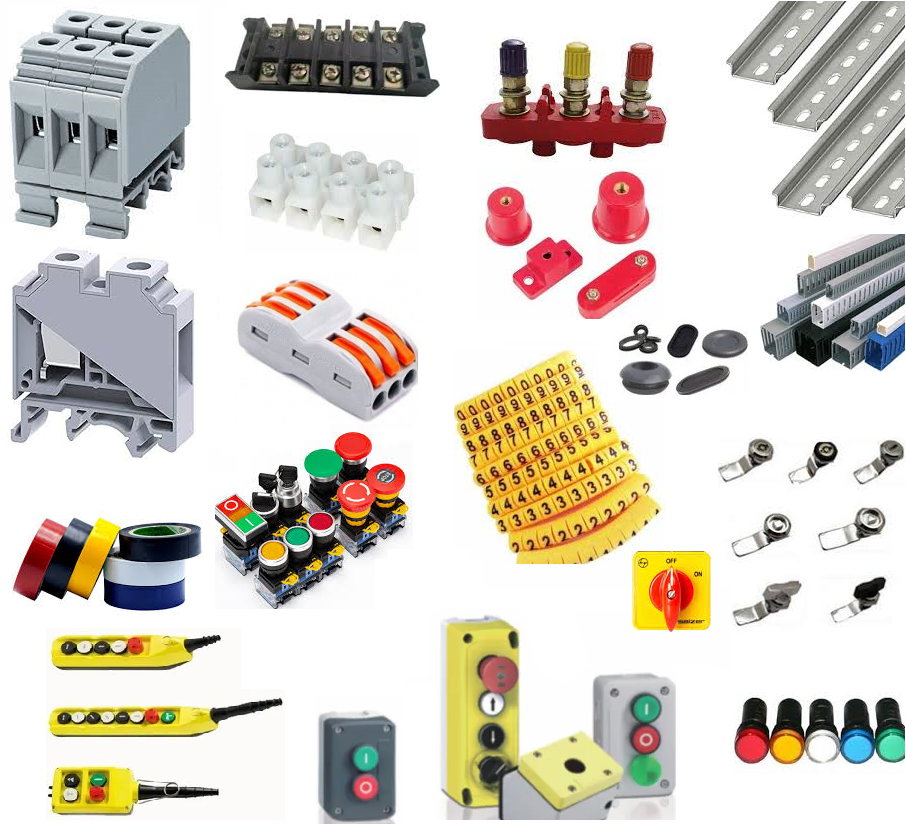
2) Isolators. … 3) Transformers and Power Supplies. … 4) Fuses. … 5) Circuit breakers. … 6) Terminal blocks. … 7) Programmable Logic Controllers (PLCs) … 8) Cable and Connectors.
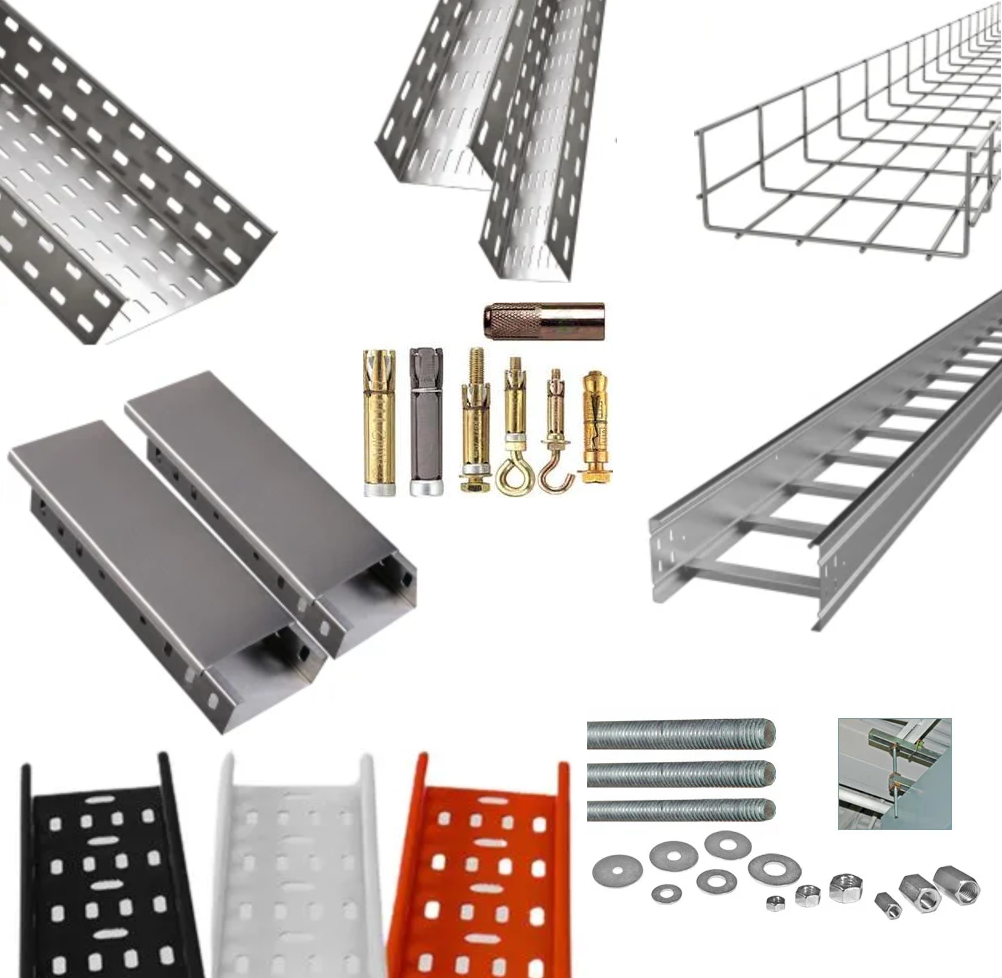
Cable trays are mechanical support systems that provide a rigid structural system for electrical cables, raceways, and insulated conductors used for electric power distribution, control, signal instrumentation, and communication. Types of Cable Trays: Ladder-type, Perforated type, Solid bottom type, Wire mesh and Channel type.
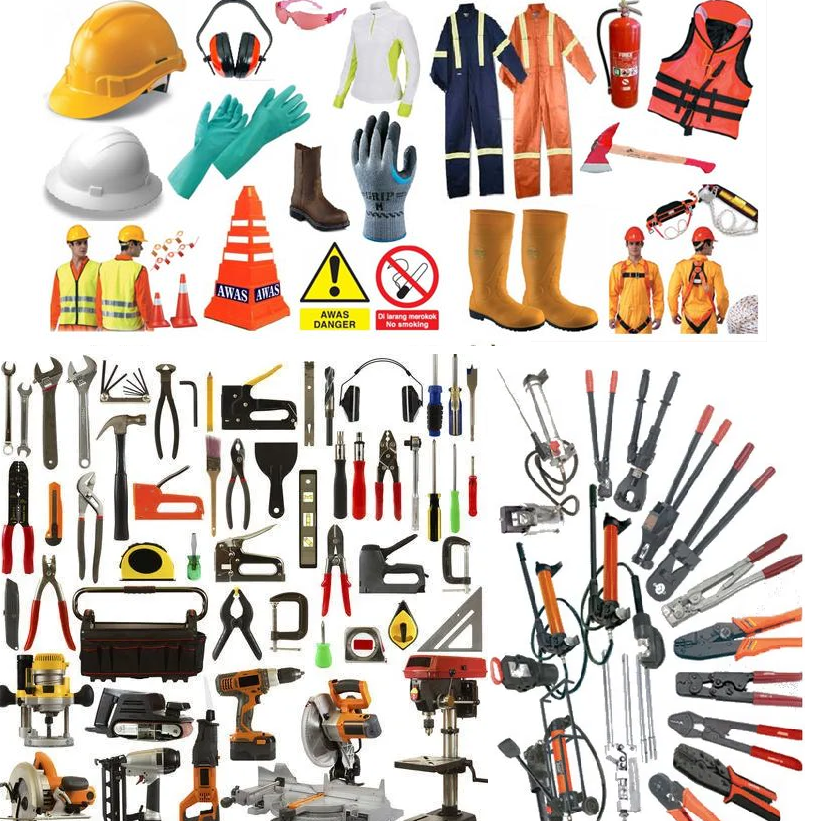
Safety equipment, also known as personal protective equipment, is specifically designed to help protect workers against health or safety risks on the jobsite. By wearing the appropriate safety equipment, workers can decrease the number of preventable accidents that occur on jobsites every year. Types of safety equipments : Skin protection (gloves and fire-resistant clothing) Protective footwear (safety boots and rubber boots with steel toe guards) Sun and heat protection when working outdoors (hats, sunscreen, shaded rest areas) Disposable protective clothing for working with chemical and bio-hazards. Tool – an instrument for making material changes on other objects, as by cutting, shearing, striking, rubbing, grinding, squeezing, measuring, or other processes.
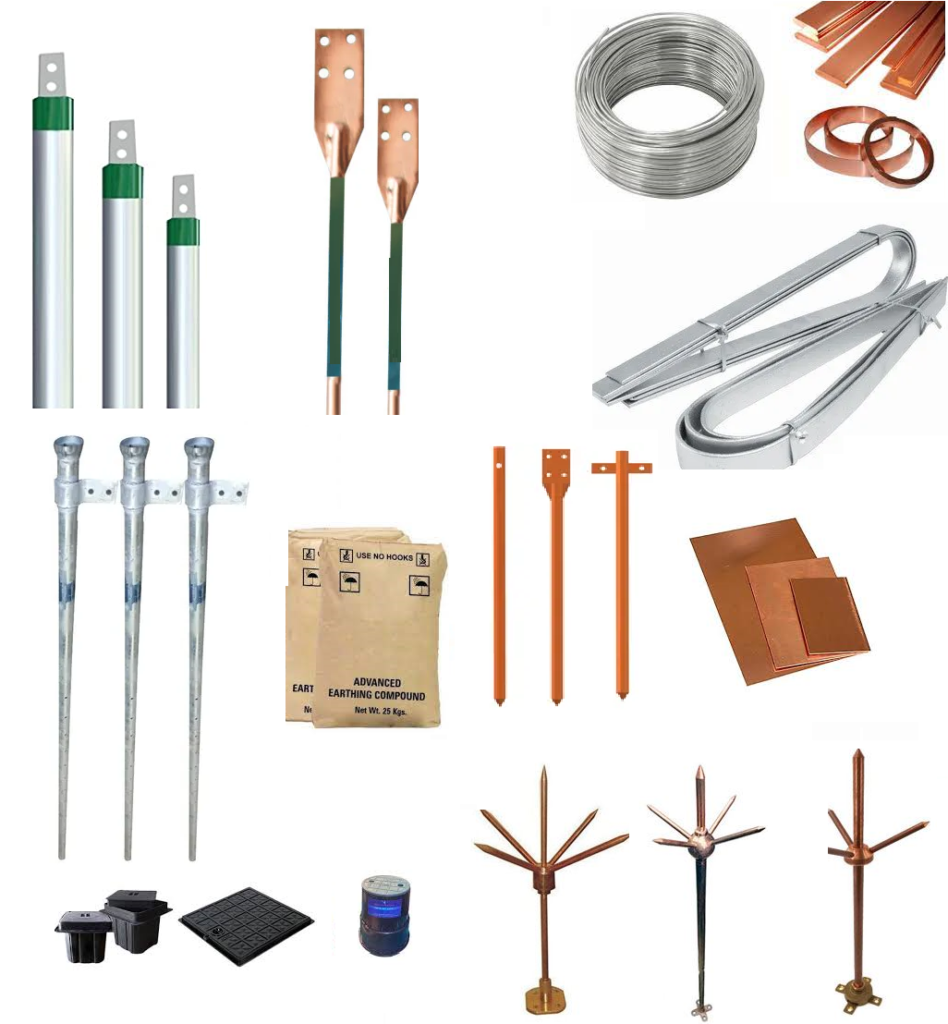
Mostly, the galvanised iron is used for the earthing. The earthing provides the simple path to the leakage current. The shortcircuit current of the equipment passes to the earth which has zero potential. Thus, protects the system and equipment from damage. Acceptable electrodes are rods, pipes, mats, tapes, wires, plates and structural steelwork buried or driven into the ground.
AADINEX Copyright © 2024. All rights reserved.